Are you struggling to convert internet site site visitors into paying consumers? The problem is obvious, traditional sites usually fall short to engage and transform visitors successfully, resulting in missed opportunities and stationary revenue growth.
Think of the aggravation of putting time and resources into driving traffic to your site, only to see minimal sales or list building. This situation can be discouraging, especially when competitors appear to easily bring in and convert leads.
In this article, we are going to talk about ClickFunnels 2.0 Trial Limitation. ClickFunnels 2.0 will assist you change the means you come close to sales and advertising. By leveraging the power of optimized sales funnels, it encourages you to engage prospects, nurture leads, and drive conversions like never before.
With ClickFunnels 2.0, you can create vibrant, high-converting sales funnels that guide potential customers through a smooth journey from awareness to activity.
Whether you’re a solopreneur, small company owner, or advertising and marketing professional, ClickFunnels 2.0 is tailored to fulfill your requirements and supercharge your online growth.
What Is ClickFunnels 2.0? ClickFunnels 2.0 Trial Limitation

ClickFunnels 2.0 is a sales and marketing system made to develop, optimize, and handle high-converting sales funnels. It features an easy to use drag-and-drop funnel builder and a collection of conversion-optimized themes for different funnel types.
ClickFunnels 2.0 emphasizes automation, incorporating with email marketing, payment gateways, CRM systems, and more for streamlined workflows. Its analytics and reporting devices enable data-driven decision-making to optimize funnels and drive better results.
ClickFunnels 2.0’s concentrate on ease of use, automation, integrations, CRM and analytics makes it a useful tool for businesses and marketing professionals seeking to improve their internet marketing and sales approaches.
Watch ClickFunnels Full Demo Here
Who Is ClickFunnels Produced For?
Business owners and Solopreneurs
ClickFunnels 2.0 is an indispensable tool for business owners and solopreneurs who are seeking to establish their online visibility, launch products or services, and generate leads and sales. Its straightforward user interface and pre-built design templates make it simple for individuals without technological competence to produce effective sales funnels.
Advertising Professionals
Advertising specialists, including online marketing professionals, advertising and marketing agencies, and experts, can use ClickFunnels 2.0 to boost their clients’ internet marketing strategies. The system’s customizable funnels, A/B screening capacities, and analytics tools equip online marketers to maximize projects and supply quantifiable results for their customers.
Online Store Businesses
E-commerce businesses can gain from ClickFunnels 2.0 by producing enhanced sales funnels for product launches, promos, and upselling possibilities. The platform’s combination with repayment portals, order forms, and shopping carts improves the checkout process and boosts conversion rates for ecommerce shops.
Coaches and Consultants
Coaches, professionals, and service-based professionals can use ClickFunnels 2.0 to bring in leads, display their proficiency, and transform leads into customers. The system’s membership website attributes also allow them to deliver online training courses, mentoring programs, and digital products to their audience.

Major Functions ClickFunnels 2.0 Trial Limitation
Drag-and-Drop Funnel Builder
ClickFunnels 2.0 uses a straightforward drag-and-drop editor that allows you to develop customized sales funnels with no coding understanding.
You can quickly add components such as headlines, pictures, video clips, kinds, switches, and more to your funnels and arrange them to produce a smooth customer experience.
Conversion-Optimized Templates
Access a collection of properly created themes maximized for high conversions across various markets and funnel kinds.
These templates are fully customizable, permitting you to tailor them to match your brand name identification and advertising objectives.
Split Testing
Conduct A/B tests to compare different components of your funnels, such as headings, CTAs, pictures, and shades, to identify what resonates best with your audience.
Examine A/B test results to make data-driven choices and optimize your funnels for optimum conversion rates.
Email Marketing Automation

Automate your email advertising and marketing campaigns using ClickFunnels’ built-in email automation tools. Create customized email sequences, section your target market, and routine emails to support leads, follow up with clients, and drive sales.
Subscription Sites
Build and handle membership sites within ClickFunnels to provide exclusive content, courses, or subscription-based services to your target market. Offer various membership rates, drip content, and take care of participant access perfectly through ClickFunnels’ subscription attributes.
Analytics and Reporting
Gain useful insights into your funnel performance with ClickFunnels’ analytics and reporting tools. Track vital metrics such as conversion rates, average order value, funnel drop-off points, and more to optimize your funnels and advertising and marketing techniques.
Integrations ClickFunnels 2.0 Trial Limitation
ClickFunnels 2.0 connects effortlessly with a wide range of third-party tools and platforms, including email advertising solutions, payment gateways, CRM systems, webinar platforms, and more.
This combination capability permits you to take advantage of existing tools and enhance your marketing efforts while maintaining a natural operations.
Message Hub
The Message Hub feature in ClickFunnels 2.0’s CRM tool changes consumer communication. It acts as a centralized hub for handling all customer communications, consisting of emails, SMS, and chat messages.
With Message Hub you can seamlessly incorporate numerous communication channels into one platform for a natural client experience. Produce and send out individualized messages to leads and clients based on their behavior and choices.
Set up automated follow-up sequences to support leads and direct them through the sales process. Receive instant notices for brand-new messages, making certain timely reactions and boosted consumer involvement.
Making Use Of ClickFunnels
Sign Up and Choose a Plan
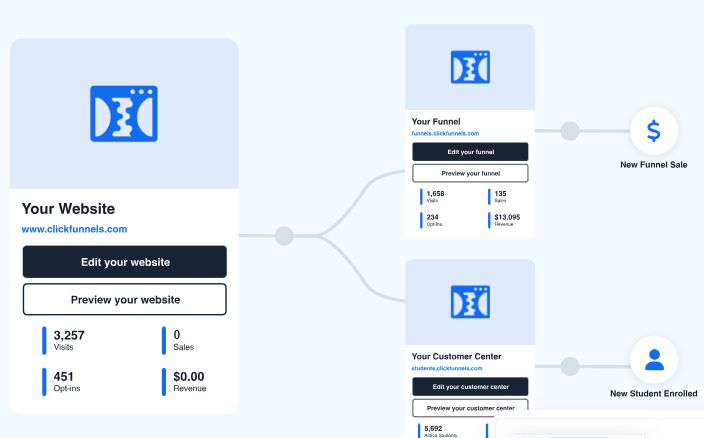
Go to the ClickFunnels 2.0 internet site and sign up for an account. Select a pricing plan that fits your business requirements, such as the Basic Plan, Pro Plan, or Funnel Hacker Plan.
Navigate the Dashboard
Upon visiting, you’ll be guided to the ClickFunnels 2.0 control panel. Familiarize on your own with the dashboard layout, that includes tabs for Funnels, Templates, Actionetics (if appropriate), Backpack (if appropriate), and Account Settings.
Create Your First Funnel
Click the “Funnels” tab to start creating a brand-new funnel. Pick the type of funnel you wish to create, such as a Lead Generation Funnel, Sales Funnel, Webinar Funnel, or Membership Funnel. Make use of the drag-and-drop editor to tailor your funnel by adding pages, elements, and integrating with third-party tools as required.
Customize Templates
Check out ClickFunnels 2.0′ library of layouts and choose one that fits your funnel’s function. Customize the layout by modifying message, pictures, shades, and layouts to straighten with your brand name and marketing message.
Set Up Integrations
Integrate ClickFunnels 2.0 with various other tools and systems, such as email advertising and marketing solutions, payment portals, CRM systems, and webinar platforms. Go to the “Integrations” area in ClickFunnels 2.0 and follow the instructions to connect with your preferred integrations.
Include Products and Offers
If you’re marketing products or services, include them to your funnel by producing product pages, order forms, and checkout procedures. Set up pricing, price cuts, upsells, and downsells to enhance your sales method and make the most of profits.
Set Up Automation and Sequences
Utilize ClickFunnels 2.0′ automation functions to set up email series, follow-up series, and action triggers based on user actions. Create automated workflows to nurture leads, transform leads, and engage consumers throughout their purchaser journey. ClickFunnels 2.0 Trial Limitation
Launch and Test
Before introducing your funnel, preview and examination each action to make sure everything functions efficiently.
Conduct A/B testing on different aspects of your funnel, such as headings, CTAs, and web page layouts, to optimize for conversions.
Display Performance
When your funnel is live, check its performance through ClickFunnels 2.0′ analytics and reporting tools. Track vital metrics like conversion rates, click-through rates, typical order value, and customer life time value to gauge success and make data-driven decisions.
Pros ClickFunnels 2.0 Trial Limitation

Increased Sales
ClickFunnels 2.0 offers a system where you can develop very optimized sales funnels customized to your audience’s needs and choices. By leveraging conversion-focused aspects such as compelling duplicate, involving visuals, strategic CTAs, and seamless user experience, you can increase your conversion rates and transform more leads into consumers.
Time Savings and Efficiency
The system simplifies the funnel-building process with its drag-and-drop editor, pre-designed layouts, and combination abilities. This implies you can produce and launch efficient sales funnels in a portion of the moment it would certainly take utilizing conventional methods, allowing you to concentrate on various other aspects of your business.
Scalability and Flexibility
ClickFunnels 2.0 enables you to scale your advertising initiatives effortlessly. Whether you’re releasing new products, targeting different market sections, or expanding your reach, ClickFunnels 2.0 provides the versatility and tools needed to suit development and adjust to altering business demands.
Data-Driven Decision
With its analytics and reporting functions, you can acquire beneficial insights into your funnel efficiency, visitor behavior, and conversion metrics. This information equips you to make informed choices, enhance your funnels for better results, and repeat based on real-time responses.
Comprehensive Platform
Rather than making use of numerous tools and systems for different advertising and sales tasks, ClickFunnels 2.0 settles everything into one integrated service.
From funnel constructing to email advertising and marketing, payment handling, and analytics, ClickFunnels 2.0 supplies all the tools you need in one place, streamlining your workflow and decreasing complexity.
Opportunities for Innovation
With its customizable features, A/B testing abilities, and automation tools, you can experiment with various approaches, repeat on your funnels, and carry out innovative advertising techniques.
This imagination enables you to stay ahead of the competition, adapt to market fads, and constantly enhance your advertising efficiency.
ClickFunnels Price Details
ClickFunnels 2.0 offers different pricing plans to satisfy varying business needs.
Basic Plan
The Basic Plan is valued at $147 per month and includes necessary features for creating and handling sales funnels. Individuals on this plan have access to the funnel home builder, permitting them to create as many as 20 funnels and 100 web pages.
The Basic Plan includes email combinations, allowing seamless interaction with leads and clients.
Pro Plan
The Pro Plan, priced at $197 each month, builds upon the Basic Plan by using limitless funnels and web pages. Customers on the Pro Plan have access to all Basic functions, plus added functions such as follow-up funnels and affiliate administration.
The Basic plan is optimal for businesses aiming to scale their funnel procedures and utilize advanced marketing methods.
Funnel Hacker Plan
The Funnel Hacker Plan is the top-tier plan, valued at $297 per month. It is made for businesses with high web traffic and complex sales funnel requirements. Along with all Pro attributes, individuals on this plan receive top priority support and training sessions to optimize their use of ClickFunnels 2.0.
The Funnel hacker plan provides detailed support and sources for businesses concentrated on growth and optimization.

Last Word

We wish this article aids you respond to the questions you have on ClickFunnels 2.0 Trial Limitation. And it will certainly not change your decision to use this unbelievable software.
It is clear that the ClickFunnels 2.0 software isn’t nearly tools and attributes, it’s regarding embracing technology and encouraging business development. ClickFunnels 2.0 represents a change in how we approach digital marketing and sales.
It’s a stimulant for creativity, permitting businesses to design one-of-a-kind and very effective sales funnels customized to their audience’s requirements. By improving workflows and removing hand-operated tasks, businesses can concentrate more on method and consumer engagement, driving far better results and ROI.
But perhaps one of the most compelling aspect of ClickFunnels 2.0 is its community and assistance network. From fellow business owners to sector professionals, ClickFunnels 2.0 fosters partnership and discovering, enabling businesses to stay ahead of trends and challenges.
So, as you embark on your digital journey, remember to embrace innovation, take advantage of the tools available, and equip your business to get to new heights with ClickFunnels 2.0.